PacificMH

Marshall Islands: the DAO archipelago

The Marshall Islands is home to one of the most intriguing and innovative web3 structures - the MIDAO LLC. The RMI DAO Act legally recognises a DAO as an LLC, enables on-chain and algorithmic DAO governance and execution, and offers low to no tax. Together, these features make it a highly attractive crypto-native legal form for fully decentralised protocols willing to accept some recognition and banking friction.

Explore the jurisdiction
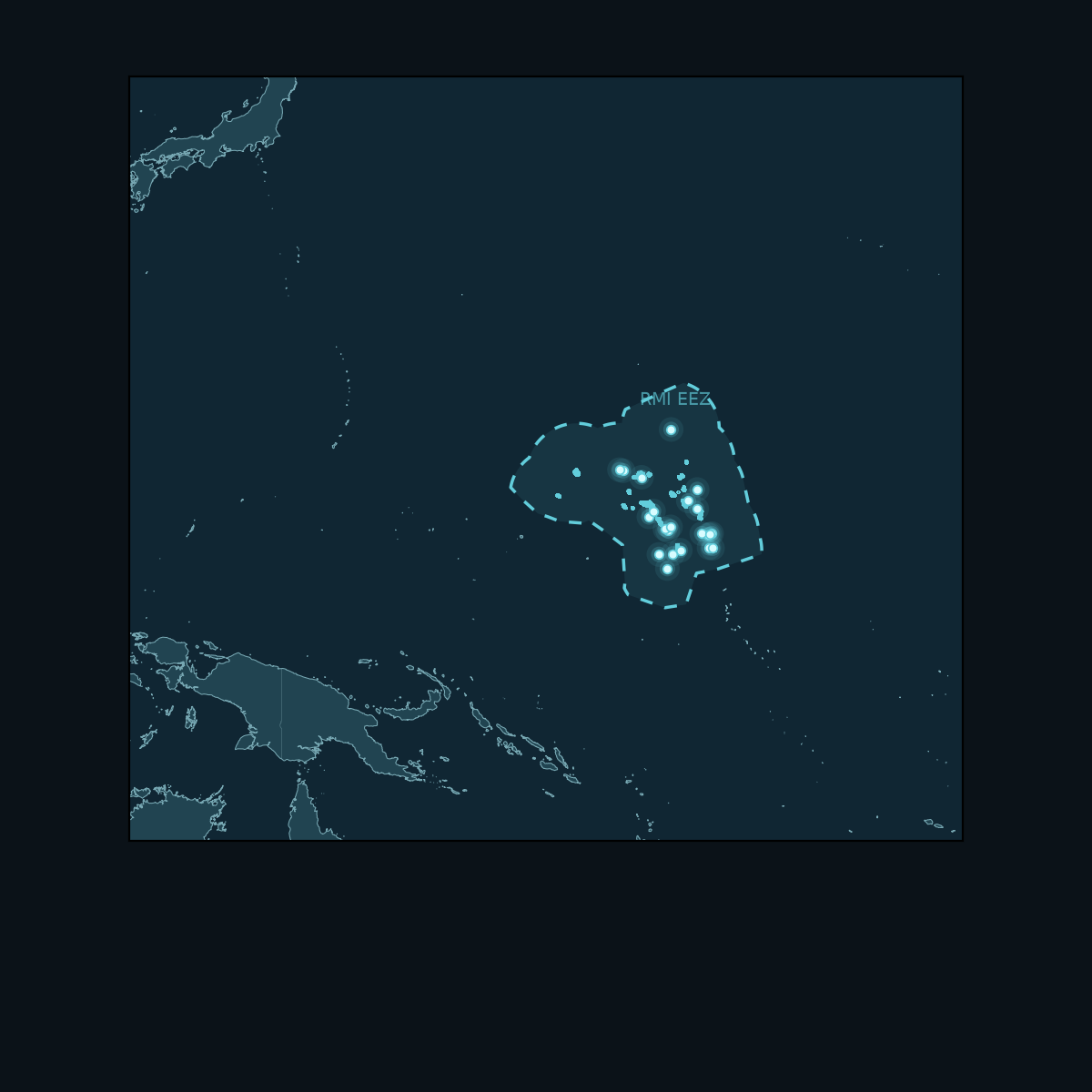
Regional Pacific map highlighting the Marshall Islands atolls and Exclusive Economic Zone

Jurisdiction profile

Marshall Islands

MH

Key characteristics

At a glance

Tax
0-3% Corporate, Income, Capital Gains Tax
Setup time
1–2 weeks (DAO LLC)
Cost band
Low to Medium ($5k–$10k+ setup)
Substance
Minimal (Registered Agent required)
Best for
Pure decentralised protocols, DeFi startups, explicit DAO legal recognition, on-chain governance

The jurisdiction

What it is

In the blue waters of the distant Pacific sits one of the more remarkable jurisdictions within the web3 space - the Marshall Islands. Previously known for its unique premodern navigational arts and an attractive latter-day offshore shipping registry, the Marshall Islands has become more recently famous as a hub for DAOs and web3. In 2022 it enabled the creation of DAO LLCs, specialised entities to govern DAOs and other web3 projects. Instead of trying to cram a decentralized protocol into a legacy corporate structure or an 'orphan' foundation, the RMI DAO Act allows your DAO to be legally recognized as a DAO. It bridges the gap between on-chain reality and off-chain legal protection.

The case for it

Why web3 teams use Marshall Islands

01

Native DAO recognition

The RMI DAO Act explicitly recognizes DAOs as a form of Limited Liability Company (LLC). This means your DAO can sign contracts, open bank accounts (in theory), and hold assets, while shielding individual token holders and contributors from personal liability. It solves the 'general partnership' risk that plagues unincorporated DAOs.

02

Algorithmic governance

The legislation is designed to respect on-chain governance. You don't need a physical board of directors holding quarterly meetings. The law allows the DAO's smart contracts and token-based voting mechanisms to serve as the legally binding governance structure.

03

The Series DAO LLC

If you are building a complex ecosystem (e.g., a core protocol with multiple sub-DAOs or distinct investment pools), the RMI allows for a 'Series DAO LLC.' You can spin up legally segregated sub-entities under one master DAO, isolating risk without the cost of incorporating entirely new companies.

04

Low or zero taxes

The RMI is a low-tax jurisdiction. Not-for-profit DAO LLCs pay 0% corporate tax; for-profit DAO LLCs pay 3%.

The constraints

Trade-offs & friction

The strongest jurisdiction on paper may still be the wrong operational fit. These are the issues that usually affect the decision.

Novelty risk

The RMI DAO Act is groundbreaking, but it's relatively new. There isn't decades of case law to rely on if things go wrong. You are operating on the cutting edge of legal theory.

Global recognition

While the RMI recognizes your DAO, a judge in New York or London might still struggle to understand it. If you have heavy operations or legal disputes in major onshore jurisdictions, the RMI structure might face scrutiny.

Banking is still a grind

Having a legally recognized DAO LLC doesn't magically make traditional banks want to work with you. You will still face an uphill battle securing fiat banking and will likely rely on crypto-native financial services.

Illustrative role

Place in the multi-entity stack

For DAOs, the MIDAO LLC is the Protocol Layer. It is the entity that 'is' the DAO: project governance occurs within it, token holders are its members, and its smart contracts and token-based voting mechanisms govern execution. Unlike a Cayman or Panama foundation, it does not act broadly for a separate class of beneficiaries or project participants. It fully encompasses the DAO's participants, treasury and protocol governance. It is often paired with a separate DevCo (Development Company) in a different jurisdiction that hires engineers and builds the software.

Illustrative only. The exact entity stack depends on activities, counterparties, tax position and regulatory perimeter.

Project governance lives here

Marshall Islands DAO LLC

The DAO itself

Token holders

Members of the DAO LLC with limited liability

On-chain governance

Smart contracts and token voting govern and execute

Protocol & treasury

Held and governed within the same legal entity

Token holders are members inside the entity - not a separate beneficiary class for whom a foundation acts.

Optional operational layer

Development company

Employs contributors, signs operational contracts and builds software

Decision context

How it compares

No jurisdiction wins on every dimension. Compare the current option against its closest alternatives before deciding where each entity belongs.

Compare all jurisdictions
DimensionMarshall IslandsCayman IslandsPanama
Primary web3 focusNative DAO LLCs, on-chain governanceFoundations, treasuries, larger fundsToken issuance, DAOs, treasuries, DeFi, operations
CostLow to MediumHigherMedium
SpeedFastModerateFast
RegulationRMI DAO Act; DAO-specific LLC frameworkRobust, CIMA-supervisedNo VASP regulation; flexible securities regulation
Web3 use casePure DAOs, protocol governance, Series DAO LLCsDAO foundations, protocols, treasuries, asset holdingToken issuance, DAO foundations, DeFi, operations

Frequently asked questions

Why use an RMI DAO LLC instead of a Cayman Foundation?

A Cayman Foundation is an 'orphan' entity (no owners) that acts on behalf of the DAO. It is not itself the DAO, and it relies on the discretion of directors to execute the DAO's wishes. An MIDAO LLC is the DAO, legally recognizing the token holders as members with limited liability. The RMI structure is often cheaper and more philosophically aligned with pure decentralization.

Does the RMI DAO Act require a physical board of directors?

No. Directors / managers are optional. The MIDAO law is designed to allow governance to happen on-chain via smart contracts and token voting, bypassing the need for traditional corporate formalities like physical board meetings.

Can an RMI DAO LLC open a bank account?

Legally, yes. Practically, it's difficult. Traditional banks are still hesitant to bank DAOs. You will likely need to use crypto-friendly digital banks or specialized web3 financial service providers.

What is a Series DAO LLC?

It's a structure that allows one main DAO LLC to create multiple 'series' or sub-DAOs. Each series has its own assets and liabilities, legally ring-fenced from the others. It's perfect for protocols that manage multiple distinct projects or investment pools.

Building a truly decentralised protocol?

Get the legal structure that actually understands what a DAO is. We form and administer Marshall Islands DAO LLCs and pair them with a DevCo where you need one.

  • A structuring recommendation, not a sales call
  • Direct answers from people who form these entities
  • No obligation, full confidentiality