No blockchain regulations
Panama offers a flexible and attractive web3 jurisdiction. There are no VASP or token-issuance laws, which draws in many projects.
Panama is a low-cost, low-friction jurisdiction for token issuance, DeFi and DAOs — its zero-regulation approach to digital assets and the ownerless Private Interest Foundation make it a fast, affordable home for web3 projects that prioritise speed and cost over heavyweight regulatory credibility.
Explore the jurisdiction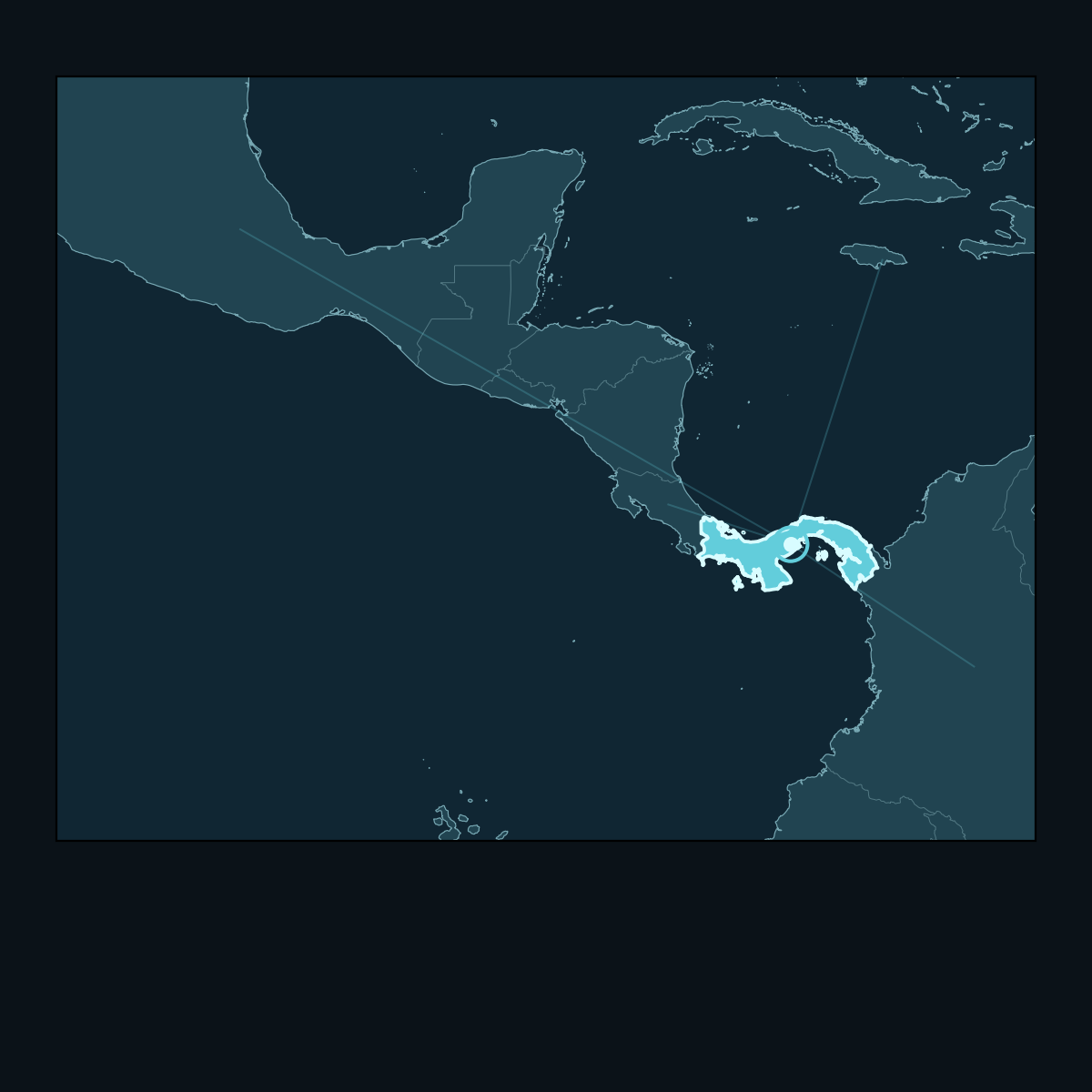
Jurisdiction profile
Panama
Key characteristics
Headline indicators only; scope and treatment depend on the entity and activity.
The jurisdiction
Renowned for its canal, its hats and its position as a leading offshore finance centre, Panama has also emerged as a leading web3 jurisdiction. As an established offshore jurisdiction it offers a business-friendly legal system and a deep reserve of professional-services expertise; as a web3 hub, it attracts projects through its low-regulation approach to digital assets.
The case for it
Panama offers a flexible and attractive web3 jurisdiction. There are no VASP or token-issuance laws, which draws in many projects.
Because there are no VASP laws, projects issuing in Panama do not need to undergo the expensive application processes seen elsewhere. For founders, Panama is a place you can move quickly.
With its flexible regulatory environment, Panama suits many early-stage DeFi projects.
The Panama Private Interest Foundation (PIF) is a highly effective legal wrapper for DAOs and decentralised protocols. As an 'orphan' structure with no owners or shareholders, it provides legal personality, asset protection and a flexible governance framework that aligns well with the decentralised ethos of web3. It can hold protocol treasuries and govern operations without traditional equity ownership.
Panama operates a territorial tax system: income generated outside Panama is generally not subject to Panamanian income tax. This can be a significant advantage for web3 projects with global operations and revenue streams.
Panama stands out for its low setup and ongoing maintenance costs compared to many other offshore jurisdictions, making it ideal for early-stage founders and projects with budget constraints.
Panama offers attractive options for first-time and smaller fund managers. Private Investment Fund (PIF-20 and PIF-50) structures are aimed at managers running smaller asset pools and a limited set of subscribers — well suited to many digital-asset fund managers.
The constraints
The strongest jurisdiction on paper may still be the wrong operational fit. These are the issues that usually affect the decision.
Although used by entrepreneurs around the world, some geographies and industries hold negative perceptions of the jurisdiction. To some European institutions, for instance, use of Panama entities can be a negative signal.
The absence of specific crypto regulation is an advantage for many projects, but it carries a risk — namely that regulation could be imposed in future. A perceived lack of long-term clarity means some projects prefer other jurisdictions.
Obtaining banking services for web3-related entities in Panama can be challenging, as traditional financial institutions may be cautious about the nascent digital-asset industry.
Spanish is the official language, which can present a barrier for some international teams — though English-speaking legal and corporate service providers are readily available.
Illustrative role
Panamanian entities can be used in a number of ways. Panama foundations make excellent holding entities through which to structure web3 projects and ecosystems — especially DAOs and protocols. Panama IBCs can be used as standalone operational entities, as token issuance entities, or as subsidiaries to Panamanian foundations and entities elsewhere.
Illustrative only. The exact entity stack depends on activities, counterparties, tax position and regulatory perimeter.
Project governance
Founders, protocol or investment strategy
Panama entity
Legal personality, governance and asset separation
Operating stack
Contracts, treasury, IP, investment or issuance entities
Decision context
No jurisdiction wins on every dimension. Compare the current option against its closest alternatives before deciding where each entity belongs.
Compare all jurisdictions| Dimension | Panama | British Virgin Islands | Malta |
|---|---|---|---|
| Primary web3 focus | Token issuance, DeFi, DAOs, funds | Token issuance, flexible funds, operating entities | EU access, token white papers, flexible funds |
| Cost | Lowest | Lower | Medium to High |
| Speed | Fast | Fast | Moderate (regulated processes) |
| Regulation | No web3 regulations; securities regs may apply | Agile: VASP Act (if applicable), SIBA | Comprehensive (MFSA, VFA Act, ISA) |
| Web3 use case | Token issuance, DAOs, DeFi | Token issuance, RWA, asset holding, funds | EU RWA tokenisation, regulated funds |
Panama is an excellent jurisdiction for web3 projects that prioritise cost-effectiveness and minimal regulatory friction, particularly for private offerings and funds targeting a limited investor base. Its private investment fund structures are a key advantage.
No. Unlike most other jurisdictions, there is no VASP regulation in Panama. Panama is therefore an excellent place for projects seeking to rapidly launch a token.
Not necessarily. SMV registration is only required for public offerings of securities. If your RWA tokenisation project is structured as a private placement (e.g. to fewer than 25 persons, or exclusively to institutional investors), or uses a PIF-20 or PIF-50 structure, it can operate without SMV registration.
Panama is a low-tax jurisdiction with a territorial tax system. It has a 0% tax rate on income generated from activities outside Panama, providing significant tax efficiency for international web3 projects.
PIFs (PIF-20 and PIF-50) are fund structures designed for private offerings. PIF-20 is limited to 20 investors, often related, while PIF-50 allows up to 50 qualified or institutional investors. Both are exempt from SMV registration, making them ideal for private pooled investments.
A Panama Private Interest Foundation is a civil-law legal entity with its own legal personality but no owners or shareholders. Its assets are held for specific purposes or beneficiaries as defined in its Foundation Charter. PIFs are highly attractive as legal wrappers for DAOs and decentralised protocols thanks to their 'orphan' structure, asset-protection capabilities and flexible governance, which can align with on-chain mechanisms.
Yes. If the entity is issuing tokenised securities marketed and sold entirely outside Panama, it does not need to register. More broadly, a standard Panamanian corporation (Sociedad Anónima) can issue tokenised shares or debt under a general private-placement exemption, provided the offer is made to a limited number of persons (e.g. fewer than 25) and is not publicly advertised.
Typical setup costs for a Panamanian entity, including a PIF or Private Interest Foundation, are very competitive — often ranging from $3,500 to $10,000. This includes incorporation fees and initial legal/corporate services, making it one of the most affordable options.
Whether it's a cost-effective token launch, an RWA tokenisation project or a DAO legal wrapper, we can form and administer the right Panama entity — and tell you when another jurisdiction is the better fit.