North AmericaDE

Delaware: the US capital raising and operations hub

Delaware is the default US legal anchor for web3 - the go-to entity for raising from US VCs, running US-facing operations, and holding IP, with predictable corporate law but full exposure to the complex US federal regulatory landscape.

Explore the jurisdiction
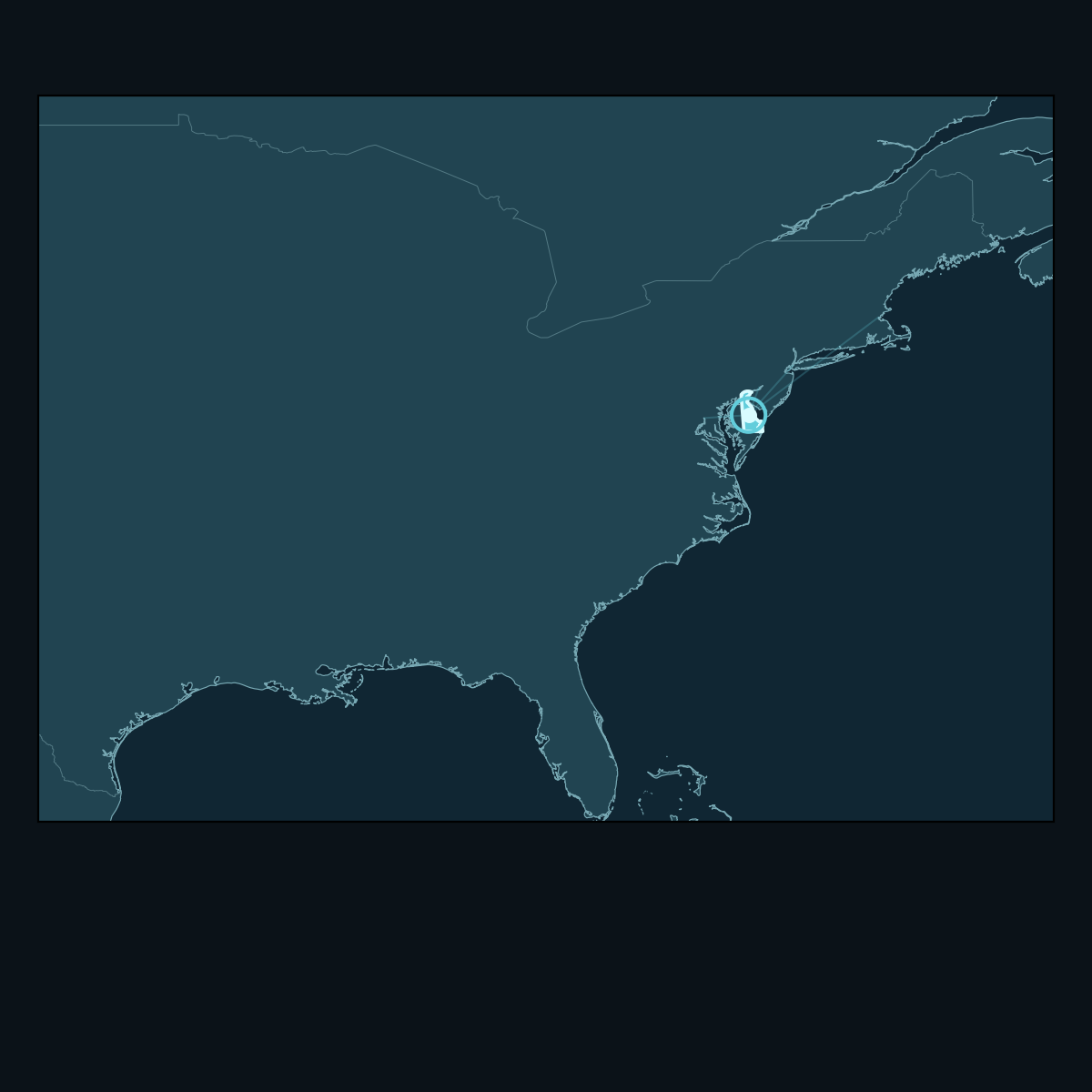
Regional map highlighting Delaware within its wider geographic context

Jurisdiction profile

Delaware

DE

Key characteristics

At a glance

Tax
Federal income tax; state franchise tax (no state income tax for non-operating entities)
Setup time
1-3 days (LLC/Corp)
Cost band
Low ($700 - $5k+ setup)
Substance
Minimal (Registered Agent required)
Best for
US-based teams, fundraising, traditional corporate structures, IP holding

The jurisdiction

What it is

Delaware is the default corporate home for most US startups, and web3 is no exception. It offers a predictable, flexible legal system that provides a robust foundation for your project. Aside from its general utility as a business-friendly jurisdiction, many US tech investors prefer to invest in companies through Delaware entities - this exerts a global gravitational pull in favor of the jurisdiction.

The case for it

Why web3 teams use Delaware

01

Familiarity for US investors and partners

If you're raising capital from US VCs or working with US partners, a Delaware entity is a known quantity. It streamlines due diligence and instills confidence, reducing friction in fundraising and partnerships.

02

Flexible LLCs for operations

The Delaware LLC is incredibly versatile. It offers pass-through taxation and immense flexibility in governance, making it ideal for operational entities (OpCos) that need to hire staff, manage IP, or handle day-to-day business for your web3 project.

03

IP holding & corporate structure

Many web3 projects use Delaware entities, often C-Corps, to hold intellectual property (IP) or as the parent company in a multi-entity structure. Its well-developed corporate law and extensive case precedent provide clarity for complex corporate actions and investor relations.

The constraints

Trade-offs & friction

The strongest jurisdiction on paper may still be the wrong operational fit. These are the issues that usually affect the decision.

US regulatory maze

Operating from Delaware means you're squarely in the US regulatory landscape. This is fragmented, complex, and constantly evolving, with potential securities law implications (SEC) and varying state-level money transmission laws (MSBs). Expect high legal bills.

Tax complexity

While Delaware itself has no state income tax for entities not doing business there, you're still subject to federal income tax. The tax treatment of crypto and DAOs in the US is complex and requires specialized advice.

Banking hurdles

Securing traditional banking for crypto-native entities in the US remains a significant challenge. Expect rigorous KYC/AML and potentially limited options.

Illustrative role

Place in the multi-entity stack

Delaware is often used to pool capital from US investors, to handle US-facing operations, and to hold critical IP. It frequently pairs with offshore entities, such as the BVI for token issuance and Cayman for institutional funds, to optimise for global regulatory arbitrage and tax efficiency.

Illustrative only. The exact entity stack depends on activities, counterparties, tax position and regulatory perimeter.

Project governance

Founders, protocol or investment strategy

Delaware entity

Legal personality, governance and asset separation

Operating stack

Contracts, treasury, IP, investment or issuance entities

Decision context

How it compares

No jurisdiction wins on every dimension. Compare the current option against its closest alternatives before deciding where each entity belongs.

Compare all jurisdictions
DimensionDelawareWyomingBritish Virgin Islands
Primary web3 focusUS corporate law, fundraising, operations, IP holdingDAO LLCs, blockchain-friendly legislationToken issuance, operations, investment
CostLow to MediumLow to MediumLow to Medium
SpeedFastFastFast
RegulationUS federal and state regulation; Delaware virtual currency and stablecoin frameworksDAO LLC framework; US federal and state regulationAgile, VASP Act (if applicable), SIBA
Web3 use caseUS fundraising, operations and IP holdingUS DAO LLCs and blockchain-native governanceToken issuance, operating companies, investment structures

Frequently asked questions

Is Delaware good for a web3 startup that wants to raise VC funding?

Absolutely. Delaware C-Corps are the standard for venture-backed startups in the US. Most VCs are familiar with and prefer Delaware entities, streamlining the fundraising process.

Can I launch a token through Delaware?

Yes. Some US-focused projects do indeed launch tokens through Delaware. However, the complexity of federal securities laws means that US-based counsel typically recommend early-stage teams consider offshore jurisdictions for their initial launch.

What are the main reasons that foreign business people set up Delaware entities?

The main reason is to raise capital from US investors, and to use the entity for US-based operations.

Will I pay state income tax if my web3 company is in Delaware?

Generally, no, if your company doesn't conduct business within Delaware. However, you will still pay an annual franchise tax to Delaware, and your entity will be subject to US federal income tax.

Do I need a crypto license in Delaware?

Not a general one, but this changed in 2026. Delaware now has dedicated licensing frameworks for virtual currency businesses and money transmitters under the Money Transmission and Virtual Currency Modernization Act, and for payment stablecoin issuers under the Payment Stablecoins Act, both signed into law in July 2026. These become fully operative within about a year of signing, or sooner if final implementing regulations are issued earlier. Outside virtual currency and stablecoin activity specifically, other digital asset activities, such as operating an exchange or providing custody, still fall under existing federal and multi-state financial regulation, including money transmitter licensing in various states.

Need a US legal anchor?

Anchor your web3 project or DAO with the legal certainty of Delaware. We form and administer Delaware entities and pair them with offshore vehicles for token issuance and funds where it makes sense.

  • A structuring recommendation, not a sales call
  • Direct answers from people who form these entities
  • No obligation, full confidentiality