Middle EastAE

UAE: a free-zone toolkit for the whole web3 stack

Forget the glossy brochures. The UAE isn't a single, shimmering web3 utopia; it's a toolkit of free zones and jurisdictions, with varying regulators and web3-relevant purposes. ADGM and DIFC offer English common law and institutional certainty for DAO wrappers and RWA tokenisation; zones such as DMCC and Meydan offer cost-effective VARA-regulated trading and operating entities. Different zones offer different opportunities, letting founders place each function in its optimal legal home.

Explore the jurisdiction
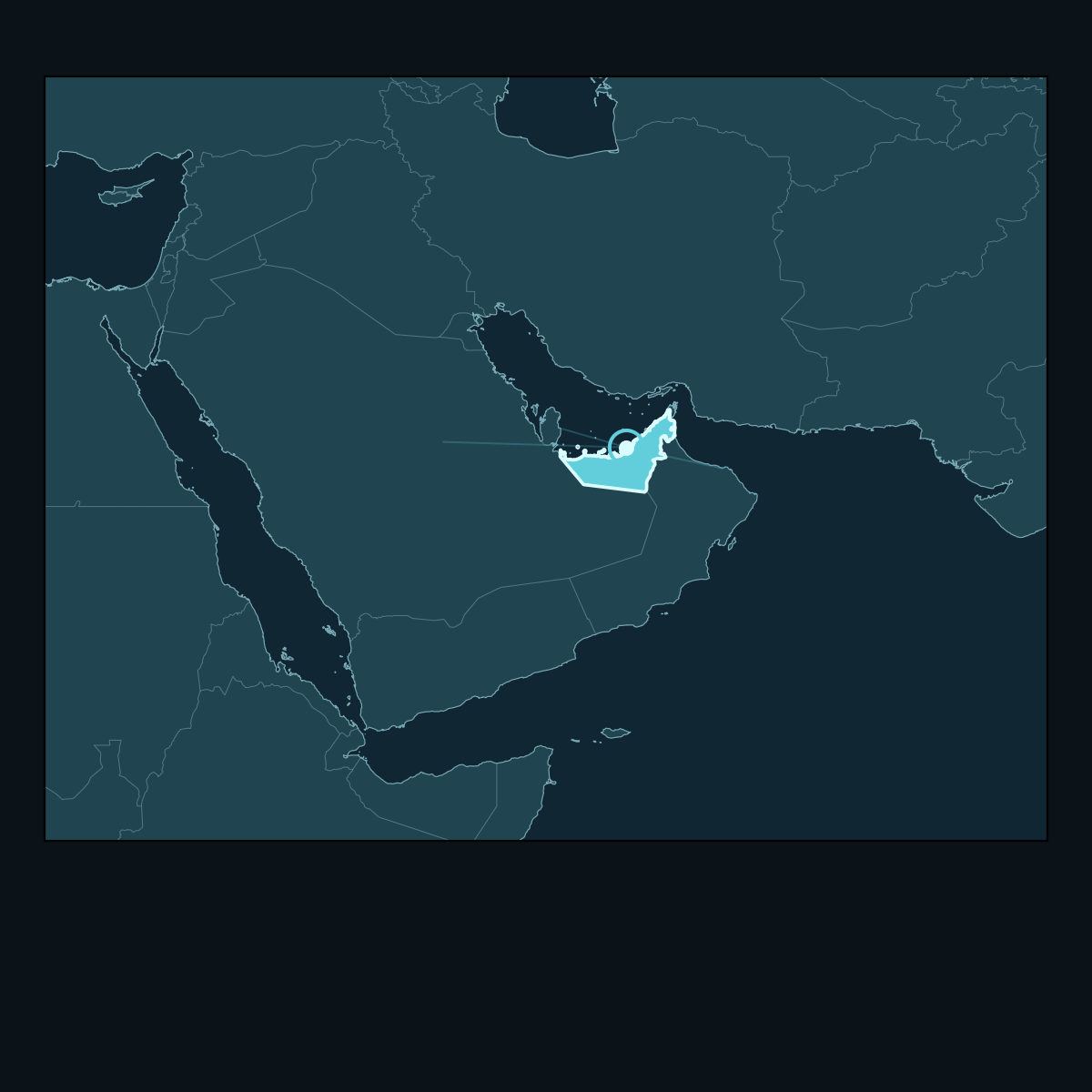
Regional map highlighting United Arab Emirates within its wider geographic context

Jurisdiction profile

United Arab Emirates

AE

Key characteristics

At a glance

Legal systems
English common law (ADGM, DIFC); UAE civil law (onshore, Meydan, DMCC)
Regulators
FSRA (ADGM); DFSA (DIFC); VARA (Dubai); CMA (Federal)
Tax
0% personal; 9% corporate (0% for Qualifying Free Zone Person)
Setup time
1–3 days (Meydan); 4–8 weeks (ADGM/DIFC); 6+ months (VASP)
Cost band
Low (~$3.5k) to institutional (~$40k+)
Substance
Mandatory for QFZP tax status and VASP licenses
Best for
Tailored legal certainty for every web3 component

The jurisdiction

What it is

The United Arab Emirates is a federal state on the eastern end of the Arabian Peninsula. It is made up of seven Emirates, of which the most populous and most famous is Dubai. Alongside its federal structure, individual Emirates — Dubai and Abu Dhabi — have created internal jurisdictions and special zones within themselves. The result is an array of jurisdictions and zones. Project builders can think of these like a mechanic's toolbox: you don't use a hammer for every job. For web3 founders, this means strategically choosing the right tool (free zone) for each specific job (DAO governance, RWA issuance, operational entity, trading desk). Your choice dictates your legal system, your regulator, and ultimately, your project's trajectory.

The case for it

Why web3 teams use United Arab Emirates

01

Variety of legal systems

Need bulletproof smart contract enforceability? ADGM and DIFC operate under English common law, offering centuries of precedent for property, contract and trust law. These jurisdictions focus on the institutional market. For lean operational entities, Meydan and DMCC fall under UAE civil law, which, while different, is increasingly adapting to digital assets.

02

A regulator for every niche

The UAE has a regulator for almost every web3 activity. ADGM FSRA pioneered DLT Foundations. DIFC DFSA is the go-to for institutional RWA and regulated financial services. VARA (Dubai) governs retail VASPs and token issuance. This specialization means you can find a regulator who gets your business model, rather than trying to shoehorn it into outdated frameworks.

03

The multi-entity stack advantage

The UAE excels at allowing founders to build a layered legal stack. You can have your DAO governance in ADGM, your RWA issuance in DIFC, and your operational DevCo in Meydan. This strategic separation optimizes for legal certainty, regulatory compliance, and cost-efficiency across your entire decentralized ecosystem.

04

Residency & substance interlocked

Unlike many jurisdictions, UAE company formation, licensing, and residency rights are deliberately interlocked. Your company isn't just a legal person; it's an anchor for your team. Visa quotas are tied to your license and office space, making substance a built-in feature rather than an afterthought — crucial for banking and tax residency.

The constraints

Trade-offs & friction: the three biggest mistakes

The strongest jurisdiction on paper may still be the wrong operational fit. These are the issues that usually affect the decision.

Choosing the wrong legal system

Incorporating in a civil law zone (like Meydan or DMCC) when your core activity demands common law certainty (e.g., complex smart contracts, trust structures) is a common misstep. You'll face rigid company codes, manual filings for basic operations, and potentially unfamiliar federal courts.

Getting the wrong license

The UAE loves licenses, and they are activity-specific. Don't assume a generic consultancy license will cover your token issuance or VASP activities. Pivoting into regulated activities without the right license is a compliance headache you don't want.

Forgetting the regulator

Virtual asset services trigger oversight from VARA (Dubai), FSRA (ADGM), DFSA (DIFC), or even the federal CMA. Many founders incorporate, then realize their activities require specific regulatory approval. This isn't a minor detail; it's a fundamental aspect of operating in the UAE.

Illustrative role

Place in the multi-entity stack

Think of your web3 project as a series of functions, each needing its optimal legal home.

ADGM (English common law, FSRA): the DAO legal wrapper (DLT Foundation) for decentralized governance, or institutional crypto funds seeking common law certainty for their RWA tokenisation. This is where you put your core protocol governance.

DIFC (English common law, DFSA): the RWA tokenisation SPV for institutional-grade digital assets, or regulated financial services entities leveraging its robust legal framework. Ideal for high-value asset tokenisation and traditional finance integration.

DMCC (UAE civil law, VARA): the proprietary trading desk or treasury management entity, benefiting from specialized licenses and VARA oversight for crypto activities. This is for teams actively trading or managing their own digital asset portfolios.

Meydan (UAE civil law, VARA): the lean operational company (OpCo) or DevCo, providing a cost-effective base for day-to-day operations, especially for early-stage teams. Often used as the operational arm supporting a VARA-licensed business.

Illustrative only. The exact entity stack depends on activities, counterparties, tax position and regulatory perimeter.
Project governance

Founders, protocol or investment strategy

United Arab Emirates entity

Legal personality, governance and asset separation

Operating stack

Contracts, treasury, IP, investment or issuance entities

Decision context

UAE hubs for web3 founders

No jurisdiction wins on every dimension. Compare the current option against its closest alternatives before deciding where each entity belongs.

Compare all jurisdictions
DimensionADGM (Abu Dhabi)DIFC (Dubai)DMCC (Dubai)Meydan (Dubai)
Legal systemEnglish common lawEnglish common lawUAE civil lawUAE civil law
Primary regulatorFSRADFSAVARA (for crypto activities)VARA (for crypto activities)
Court systemADGM Courts (common law)DIFC Courts (common law)Dubai Courts (civil law)Dubai Courts (civil law)
Web3 focusDLT Foundations, institutional crypto fundsRWA tokenisation, institutional digital assetsProprietary trading, blockchain servicesLean OpCo, startup development
Token issuanceFSRA approvalDFSA recognitionVARA permit (Category 2)VARA permit (Category 2)
Legal certaintyHigh (common law, DLT-specific)High (common law, Digital Assets Law)Moderate (civil law, VARA framework)Moderate (civil law, VARA framework)
Entry cost~$15k–$25k~$20k–$40k~$15k–$20k~$3.5k–$7k

Frequently asked questions

Why can't I just pick the cheapest free zone for my web3 project?

Because you're not just picking a price point; you're picking a legal system and a trading activity. The cheapest zone might not offer the legal certainty (e.g., common law) or the specific license your project needs. Choosing the wrong one leads to costly legal headaches down the line.

Is the 0% corporate tax in UAE free zones guaranteed for my web3 startup?

No. The 0% corporate tax is conditional on being a 'Qualifying Free Zone Person' (QFZP), which requires meeting substance requirements and ensuring your income is 'Qualifying.' Many crypto-to-crypto trading activities may fall outside this, triggering the 9% tax rate.

How does the UAE's interlocked system of company formation, licensing, and residency affect founders?

It means these aren't separate processes. Your company formation creates a legal anchor, your license legitimizes your activity, and your residency attaches people to that activity. Visa quotas are tied to your license and office space, making substance a built-in feature and upgrades potentially costly.

What's the biggest mistake web3 founders make regarding UAE regulators?

Forgetting them. In the UAE, you cannot simply 'pivot' into regulated activity. Virtual asset services trigger oversight from VARA, FSRA, DFSA, or even the federal CMA. Many founders incorporate under a generic license and only later realize their activity requires specific regulatory approval, leading to significant compliance issues.

Mapping your UAE stack?

Stop guessing your UAE strategy. We help web3 founders navigate the toolkit of free zones — from DAO wrappers in ADGM to lean OpCos in Meydan — and build the compliant, scalable stack that fits your roadmap.

  • A structuring recommendation, not a sales call
  • Direct answers from people who form these entities
  • No obligation, full confidentiality