An EU base
As an EU member state, projects set up in Malta have passporting rights into the rest of the EU.
Malta is the EU base for regulated web3 - an English-speaking, MiCA-aligned member state with EU passporting, an effective corporate tax rate of 5%, and explicit MFSA guidance for tokenised funds and RWA issuance. It suits teams that want EU access and EU credibility.
Explore the jurisdiction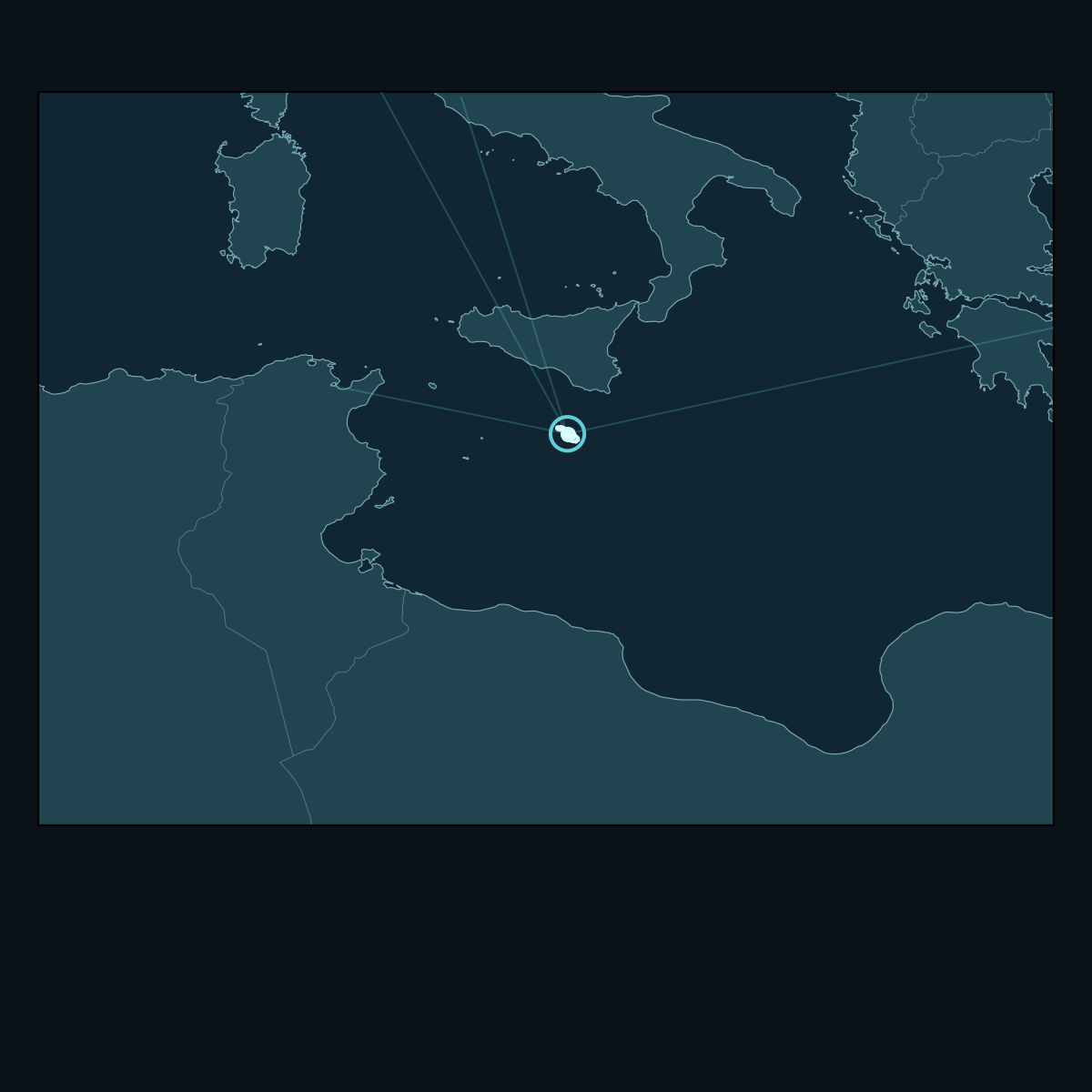
Jurisdiction profile
Malta
Key characteristics
Headline indicators only; scope and treatment depend on the entity and activity.
The jurisdiction
Malta is a dynamic island country famous for its financial services, shipping industry, and tourism. Known as the EU's 'blockchain island', it was an early entrant into the world of web3 entity formation and regulation. While previously known for its national Virtual Financial Assets Act (VFA Act), Malta falls within the EU Markets in Crypto-Assets Regulation (MiCA), providing a harmonized and explicit legal framework for crypto-assets across the European Union. Malta offers an excellent base for EU token issuance, operating and holding companies, and CASP registration.
The case for it
As an EU member state, projects set up in Malta have passporting rights into the rest of the EU.
A longtime web3 hub and a leading jurisdiction for online gambling, Malta possesses both strong regulatory expertise in emerging technologies and a deep pool of local talent.
Malta's effective corporate tax rate is 5%, making it an attractive destination for international company formation.
A former British colony, Malta uses both English and Maltese as official languages. Its commercial laws are based on English common law, the dominant legal system for international business.
The Malta Financial Services Authority (MFSA) has issued specific guidance, such as its Position Paper on Tokenisation of Fund Units, which clarifies how existing fund structures, including Private Collective Investment Schemes (CIS), can tokenise their units. This explicit guidance offers a streamlined path for compliant token issuance within established fund frameworks, now operating under the broader MiCA umbrella.
Malta boasts a well-established and reputable financial services industry, with experienced legal, accounting, and administrative professionals accustomed to complex financial structures. This infrastructure supports the sophisticated needs of tokenised RWA projects and funds, now adapting to the MiCA regime.
The constraints
The strongest jurisdiction on paper may still be the wrong operational fit. These are the issues that usually affect the decision.
While providing clarity, Malta's EU-wide comprehensive regulatory framework (MiCA) can impose a higher compliance burden and longer approval times compared to lighter-touch offshore jurisdictions. This translates to higher legal and administrative costs.
Unlike zero-tax offshore jurisdictions, Malta has a corporate tax. However, the effective rate of this tax can be significantly reduced to 5-10% through its full imputation and tax refund system. This requires careful tax planning.
As an EU jurisdiction, Malta has economic substance requirements, meaning entities must demonstrate genuine operational presence and activity within the country, which can add to operational complexity and cost.
Similar to other crypto-friendly jurisdictions, obtaining banking services for web3 entities in Malta can still present challenges, despite the clear regulatory framework.
Illustrative role
Malta entities are useful for the EU operating arm of a wider structure, and as holding and operating entities in their own right. Malta is also a good place for digital asset funds. Private Collective Investment Schemes (CIS) or Professional Investor Funds (PIFs) often serve as the regulated fund vehicle for tokenised RWAs, especially when targeting a European investor base. They can act as the primary issuer of tokenised fund units, sitting at the core of a structure that might involve other operational entities in different jurisdictions.
Illustrative only. The exact entity stack depends on activities, counterparties, tax position and regulatory perimeter.
Project governance
Founders, protocol or investment strategy
Malta entity
Legal personality, governance and asset separation
Operating stack
Contracts, treasury, IP, investment or issuance entities
Decision context
No jurisdiction wins on every dimension. Compare the current option against its closest alternatives before deciding where each entity belongs.
Compare all jurisdictions| Dimension | Malta | Cayman Islands | Luxembourg |
|---|---|---|---|
| Primary web3 focus | Regulated digital assets, CASP registration, entity formation | Institutional funds, structured finance | EU funds, broader financial services |
| Cost | Medium to High | High | Highest (EU onshore) |
| Speed | Moderate | Moderate | Slower |
| Regulation | Comprehensive | Robust | Comprehensive |
| Web3 use case | EU token issuance, EU RWA tokenisation, funds | Institutional RWA, regulated funds | Regulated EU funds, tokenised securities |
Yes, Malta is an excellent jurisdiction for web3 projects, especially those seeking a low-tax base for EU operations, licensing, and token issuance.
Yes. New token launches in Malta now go through the EU-wide MiCA and MiFID frameworks. The pathway depends on your token type: most utility-style 'other crypto-assets' require drafting and registering a MiCA whitepaper with the MFSA rather than a full licence; Asset-Referenced Tokens (ARTs) and e-money tokens (EMTs) require fuller MiCA authorisation, since Malta's 2024 legislative amendment carved these out of the old VFA Act entirely; and if you are also providing services around the token, such as running an exchange, custody, brokerage, or advisory, that triggers separate CASP authorisation with tiered capital requirements (€50,000-€150,000 depending on the service). Malta remains an active launch jurisdiction with a mature regulator and experienced service providers, but the process now runs through MiCA rules rather than Malta's historical ICO framework.
Yes, RWAs can be tokenised in Malta. Funds can be tokenised, and the MFSA has provided specific guidance on the tokenisation of fund units. Its June 2025 Position Paper covers a range of existing fund structures, including Alternative Investment Funds (AIFs), Professional Investor Funds (PIFs), Notified AIFs/PIFs, and UCITS, not just Private Collective Investment Schemes. Tokenised bonds and tokenised securitisation interests have also already been issued in Malta under existing instrument-level rules. More broadly, RWA token issuance will follow EU-wide MiFID securities issuance rules. Malta allows prospectus exemptions for certain forms of security issuance, and many projects tokenising less than EUR 5 million will not need a prospectus.
It depends on the classification of your token and the activities you undertake. MiCA does not apply when the token qualifies as a financial instrument under MiFID. If it is not MiFID-regulated, and if your RWA token is classified as a crypto-asset under MiCA, such as an Asset-Referenced Token, E-Money Token, or other utility token, and you engage in crypto-asset services such as operating a trading platform, providing custody, or offering advice, then CASP authorisation under MiCA will be required. Existing VFA licensees have a transitional period to become MiCA compliant. Tokenising fund units within a recognised fund structure might leverage existing fund regulations with MFSA recognition, which will also need to align with MiCA principles.
Malta has a corporate tax rate of 35%, but its full imputation system allows for effective tax rates as low as 5-10% through shareholder refunds. This makes it a tax-efficient EU jurisdiction for international businesses, including web3 entities.
A Private CIS in Malta is a type of investment fund limited to a maximum of 15 participants who must be deemed 'fit and proper' by the MFSA. It allows for private offerings without a full prospectus, making it a suitable structure for tokenised funds targeting a limited group of sophisticated investors.
Typical setup costs for a Malta entity range from $6,000 to $25,000, depending on the complexity and regulatory requirements. Regulated fund structures or VFA-licensed entities will incur higher costs due to more extensive legal and compliance work.
Ready to launch your tokenised fund or RWA project within the EU? Malta offers a clear and robust regulatory environment. Contact us for a consultation or use our decision tool to find your ideal structure.